The Future is Automated: Transforming IT Operations Through Intelligent Automation
In an era where digital transformation accelerates at breakneck speed, IT departments face unprecedented demands. From managing sprawling cloud infrastructures to ensuring round-the-clock system availability, modern IT teams are constantly challenged by growing complexity and shrinking budgets.
This is where intelligent automation emerges as a game-changer. By integrating artificial intelligence with traditional automation tools, organizations can achieve operational excellence while reducing human error and increasing efficiency across their entire technology stack.
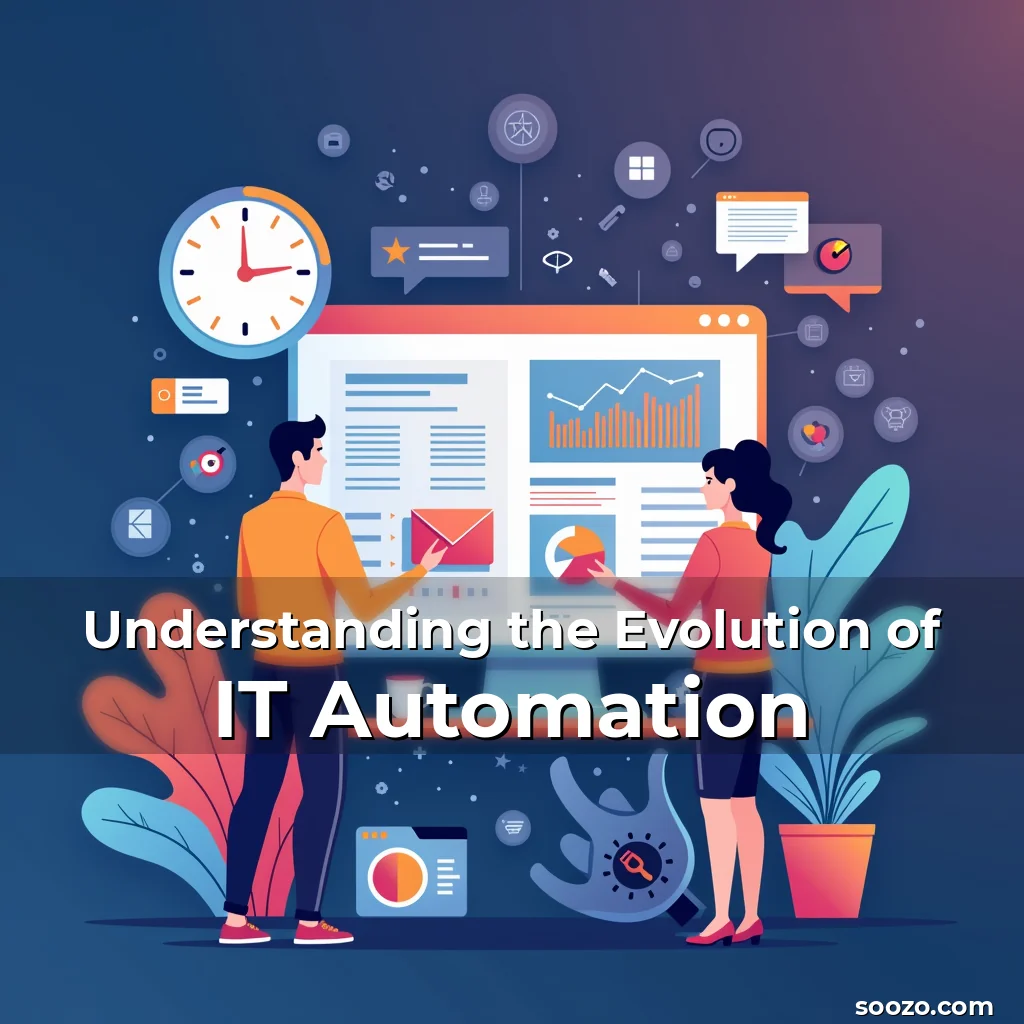
Understanding the Evolution of IT Automation
The journey toward automated IT operations has been marked by several key technological milestones. In the early days of computing, manual processes dominated every aspect of system management, requiring dedicated personnel to handle even basic tasks like server reboots or software updates.
The introduction of scripting languages in the late 1980s represented a significant turning point. Tools like Perl and shell scripts enabled administrators to automate repetitive commands, marking the beginning of what we now recognize as DevOps practices.
As infrastructure grew more complex, configuration management systems emerged. Puppet and Chef revolutionized how enterprises managed their servers, allowing them to define desired states rather than manually configuring each machine individually.
Cloud computing introduced new challenges that further accelerated the need for advanced automation solutions. With resources becoming ephemeral and scalable, static configuration approaches proved inadequate for dynamic environments.
- Scripting Languages: Enabled batch processing of commands through code, significantly reducing manual effort required for routine maintenance tasks
- Configuration Management: Allowed centralized control over thousands of devices simultaneously, creating consistent environments across distributed networks
- Infrastructure-as-Code: Introduced version-controlled blueprints for infrastructure components, enabling rapid deployment and rollback capabilities during failures
Modern IT automation platforms now combine these foundational elements with AI-driven analytics. Machine learning algorithms analyze historical data patterns to predict potential outages before they occur, transforming reactive maintenance into proactive problem-solving.
The evolution from simple script execution to predictive analytics represents a paradigm shift in how organizations approach IT operations. This progression continues to accelerate as emerging technologies like quantum computing promise to redefine what’s possible with automation.
The Core Components of Modern IT Automation Frameworks
A robust IT automation framework consists of several interconnected components working in harmony. At its foundation lies the orchestration layer which coordinates various automation activities across different systems and services.
Intelligent monitoring systems form another critical component. These systems continuously track performance metrics, log files, and network traffic to detect anomalies in real-time. When combined with machine learning models, they can identify subtle patterns indicative of impending issues.
The integration of chatbots and virtual assistants within automation frameworks marks a significant advancement. Natural language processing enables seamless communication between humans and machines, allowing operators to issue commands through conversational interfaces.
Data lakes play an essential role in storing vast amounts of structured and unstructured data generated by IT systems. This centralized repository serves as the foundation for advanced analytics and machine learning initiatives aimed at optimizing operations.
MLOps (Machine Learning Operations) bridges the gap between data science and production environments. It ensures that machine learning models used in automation remain accurate, up-to-date, and compliant with organizational policies.
Security remains paramount in any automation implementation. Zero Trust Architecture principles ensure that only authorized entities have access to sensitive information and critical systems at all times.
Real-World Applications Across Industries
Healthcare providers leverage IT automation to maintain compliance with strict regulatory requirements. Electronic health records (EHR) systems automatically update audit trails when changes occur, ensuring full traceability of patient data modifications.
Banks utilize automated fraud detection systems that analyze millions of transactions per second. These systems employ anomaly detection algorithms to flag suspicious activity almost instantaneously, preventing financial losses before they materialize.
Retail companies benefit greatly from inventory management automation. Smart sensors connected to IoT platforms provide real-time visibility into stock levels, triggering automatic replenishment orders when thresholds are breached.
Manufacturing plants use predictive maintenance systems powered by edge computing. Sensors embedded in machinery collect telemetry data which is analyzed locally using lightweight ML models to anticipate equipment failures before they happen.
E-commerce platforms rely heavily on load balancing automation to manage fluctuating traffic volumes. Dynamic resource allocation based on demand forecasting ensures optimal website performance during peak shopping periods.
Telecommunications providers implement self-healing networks that automatically reroute traffic around failed nodes without human intervention, maintaining service continuity during outages.
Cybersecurity firms deploy threat intelligence platforms that correlate data from multiple sources to identify sophisticated attack vectors faster than ever before. Automation allows for immediate containment of threats once detected.
Implementing IT Automation in Your Organization
A successful IT automation initiative begins with a clear understanding of your organization’s needs and goals. Conducting a thorough assessment helps identify areas where automation can deliver the most value.
Create a cross-functional team consisting of developers, operations staff, security experts, and business leaders to guide the implementation process. This diverse perspective ensures that technical feasibility aligns with strategic objectives.
Select appropriate tools that integrate seamlessly with your existing infrastructure. Consider factors such as ease of use, scalability, and compatibility with other enterprise systems when making vendor selections.
Start small but think big. Implement pilot projects in non-critical areas first to test proof-of-concept scenarios before scaling up to larger implementations. This iterative approach minimizes risks associated with large-scale deployments.
Establish governance frameworks to manage change effectively. Define approval workflows for modifying automation scripts and set standards for documentation and testing procedures.
Invest in training programs to equip employees with necessary skills. Provide ongoing education opportunities to keep pace with rapidly evolving technologies in the field.
Monitor progress regularly using KPIs such as mean time to resolution (MTTR), incident frequency rates, and cost savings percentages. Continuously refine strategies based on measurable outcomes.
Don’t forget about disaster recovery planning. Ensure that all critical automation workflows have backup mechanisms in place to prevent single points of failure.
Finally, cultivate a culture that embraces continuous improvement. Encourage feedback loops between development and operations teams to drive innovation and optimize processes continually.
Measuring Success in IT Automation Initiatives
Defining success metrics upfront is crucial for evaluating the effectiveness of your automation strategy. Key performance indicators vary depending on the nature of your organization’s IT environment.
For infrastructure-focused teams, common metrics include server uptime percentage, number of incidents resolved through automation, and average time taken to provision new resources.
Application development groups often measure success through deployment frequency, lead time for changes, and failure rate per deployment cycle. These metrics help quantify improvements in delivery speed and quality.
Security teams may focus on metrics related to vulnerability remediation timelines, false positive rates in intrusion detection systems, and overall reduction in breach incidents post-automation implementation.
Customer-facing support functions typically track improvements in response times, ticket resolution rates, and customer satisfaction scores following automation adoption.
An effective way to visualize progress is through dashboards displaying relevant KPIs in real-time. These visual representations make it easier to spot trends and identify areas needing attention.
Regularly scheduled reviews allow stakeholders to assess whether current automation efforts align with strategic objectives. Adjustments can then be made proactively rather than reactively addressing shortcomings later.
It’s also important to consider qualitative feedback alongside quantitative measurements. Employee surveys and user experience studies provide valuable insights into how well automation is being received and utilized.
Challenges and Mitigation Strategies in IT Automation
Despite numerous benefits, implementing IT automation presents several challenges that require careful consideration. One of the primary obstacles is resistance to change among employees accustomed to traditional work methods.
To overcome this challenge, invest in comprehensive training programs that demonstrate how automation enhances job roles rather than replacing them. Emphasize that automation frees up time for more strategic tasks rather than eliminating jobs entirely.
Technical debt poses another significant hurdle. Legacy systems often lack the flexibility needed to support modern automation tools, necessitating costly upgrades or replacements.
Prioritize investments in infrastructure modernization as part of your automation roadmap. Gradual migration plans minimize disruption while maximizing long-term return on investment.
Integration complexities arise when connecting disparate systems with varying protocols and APIs. Ensuring interoperability requires meticulous planning and architecture design.
Develop standardized interface specifications to facilitate smoother integrations. Establish clear guidelines for API usage and data exchange formats across different platforms.
Safety concerns must not be overlooked. As automation handles increasingly complex tasks, the risk of unintended consequences rises proportionally.
Implement rigorous testing protocols including simulation environments and staged rollouts before deploying automation solutions in production settings. Maintain fallback options for reverting changes when needed.
Compliance considerations add another dimension of complexity. Different industries have distinct regulations governing data handling, privacy protections, and auditing requirements.
Work closely with legal counsel to understand applicable laws and develop policies that ensure complete adherence to regulatory standards throughout the automation lifecycle.
Lastly, maintaining the right balance between automation and human oversight proves challenging. Over-reliance on automated systems can create blind spots in decision-making processes.
Establish hybrid models where critical decisions still involve human judgment. Set thresholds for escalating certain types of actions beyond predefined parameters for manual review.
The Road Ahead: Emerging Trends in IT Automation
Quantum computing promises to revolutionize IT automation by solving problems currently deemed intractable. Its ability to process massive datasets exponentially faster opens new possibilities for optimization algorithms and predictive modeling techniques.
Edge computing will further decentralize automation capabilities by bringing computation closer to data sources. This reduces latency issues inherent in cloud-based solutions while enabling real-time decision-making at remote locations.
Generative AI introduces exciting prospects for automating creative tasks previously thought impossible for machines. From generating code snippets to designing UI layouts, these advancements blur the lines between human creativity and machine intelligence.
Zero-trust architectures will become integral to secure automation ecosystems. Continuous authentication checks and micro-segmentation techniques will protect against insider threats and external breaches alike.
Autonomous systems will gain greater autonomy through improved contextual awareness. These systems will adapt dynamically to changing conditions without explicit programming instructions.
Digital twins will enable hyper-realistic simulations of physical assets, allowing for extensive testing of automation scenarios before actual deployment occurs. This capability dramatically improves risk mitigation strategies.
Explainable A This transparency is particularly crucial in regulated industries dealing with high-stakes decisions.
Collaborative robots (cobots) will augment human workers rather than replace them entirely. These adaptable machines will assist in tasks ranging from hardware assembly to complex troubleshooting scenarios.
Blockchain technology will introduce immutable audit trails for all automated actions, enhancing accountability and traceability in mission-critical applications.
Augmented reality interfaces will transform how users interact with automated systems, offering immersive visualization tools that simplify complex operational processes.
These emerging trends collectively signal a future where IT automation becomes even more pervasive, efficient, and capable of tackling previously insurmountable challenges.
Conclusion
The landscape of IT automation is undergoing rapid transformation driven by advances in artificial intelligence and machine learning. Organizations embracing these innovations position themselves advantageously in today’s competitive marketplace.
By strategically implementing intelligent automation solutions tailored to specific business needs, companies can achieve unprecedented efficiencies while maintaining strong security postures. The key lies in finding the right balance between automation capabilities and human expertise.
As new technologies continue to emerge, staying informed and adaptable will be crucial for sustained success in leveraging IT automation effectively. Those who embrace this evolution stand to reap substantial rewards in terms of productivity gains and operational resilience.
The path forward involves continuous learning, experimentation, and refinement. Successful IT automation isn’t merely about adopting the latest tools; it’s about cultivating an ecosystem that supports sustainable growth through intelligent, adaptive systems.

news is a contributor at Soozo. We are committed to providing well-researched, accurate, and valuable content to our readers.