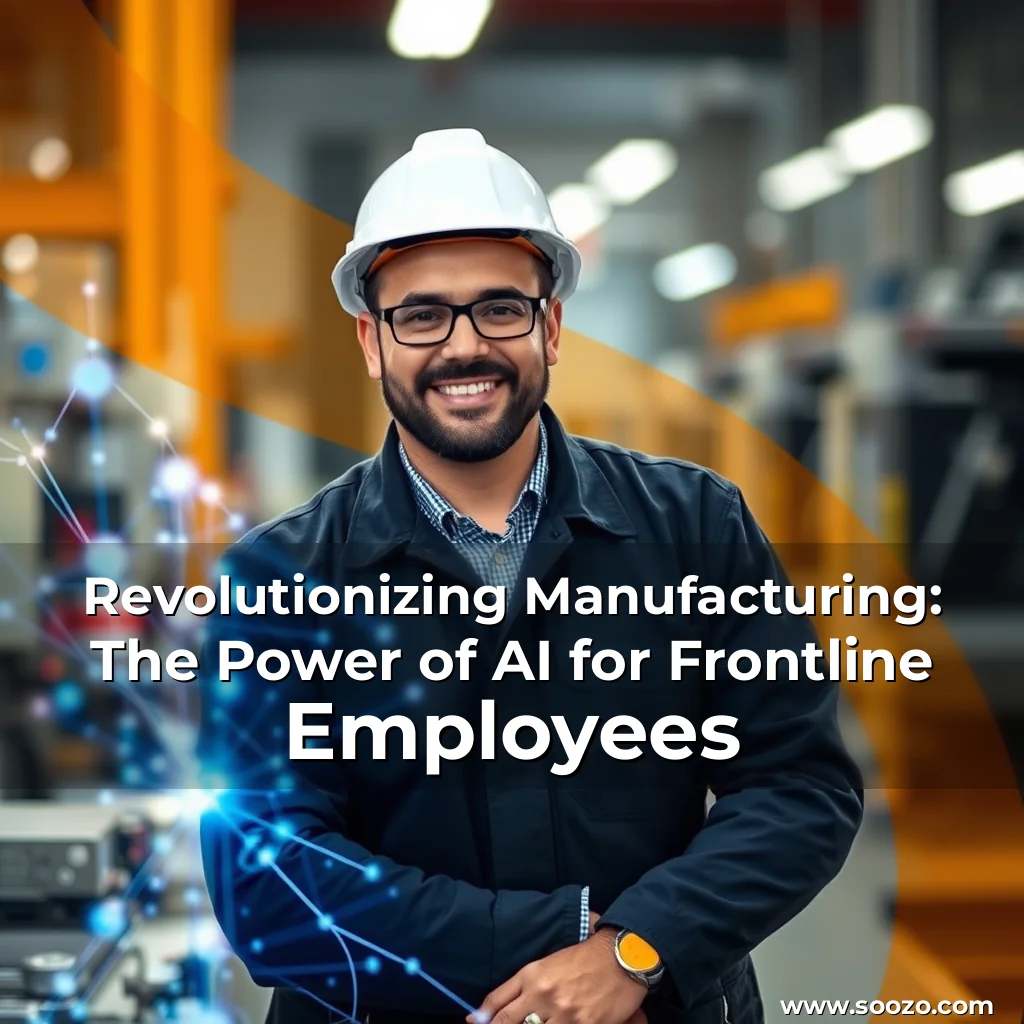
The manufacturing industry is witnessing a technological revolution, driven largely by the adoption of Artificial Intelligence (AI). However, despite the significant advancements in automation and predictive maintenance, there is a pressing need to address the daily work experience of frontline employees.
Low Investment in Frontline AI Training
Despite the growing presence of AI in the manufacturing sector, only 14% of frontline employees have received training on how AI will change their jobs. This lack of preparation is a
for enhancing productivity, engagement, and employee retention.
Employee Concerns About AI
A growing number of workers are expressing concerns about the impact of AI on their jobs. Over 40% of workers fear that AI will replace their jobs within the next decade, highlighting significant apprehension about AI’s impact on employment.
The Real Cost of Ignoring Frontline Tech
Companies are investing heavily in machines, but neglecting to invest in workforce productivity tools. This
represents a significant missed opportunity for enhancing productivity, engagement, and employee retention.
Disconnected Workers are Costing You
The manufacturing industry has one of the lowest employee engagement rates, with only 34% of employees feeling engaged at work. Disengaged employees are 87% more likely to leave their organizations, underlining the critical link between engagement and retention.
App-based User Interfaces are Failing the Frontline
Many workforce applications are designed with desk workers in mind, but fail to meet the needs of frontline teams. These applications are often:
*
*
*
*
Productivity Loss Due to Poor Design
Companies with engaged employees are 21% more profitable and 22% more productive than those with disengaged employees, highlighting the financial impact of effective tool design and employee engagement.
Empowering the People Doing the Work
The natural next phase of AI adoption in manufacturing is to go beyond automation and empower the people doing the work. It also has to be safe.
The Benefits of AI-Powered Tools
Companies serious about retention, productivity, and workforce engagement will benefit from prioritizing the employee experience, not just process optimization. This means investing in:
*
-
*
- AI-powered tools that simplify work, not add complexity
- Seamless, mobile-first solutions that align with the workflows of frontline teams
- Effective communication strategies that genuinely connect workers to their employers
- Enhanced safety and retention
*
*
*
*
| Example | DHL Supply Chain |
| Reduced crashes by 26% | Reduced driver turnover by 50% |
The Future of Manufacturing: Empowering the Workforce
As the manufacturing industry continues to evolve, it is imperative that leaders prioritize the workforce, not just machines. By doing so, they can unlock the full potential of AI and create a more engaged, productive, and sustainable industry.
“AI doesn’t work 24/7, but our HR doesn’t. That’s why we’re so confident in using AI to support our workforce,” says Valentine Chavez-Gonzalez, Director of Human Resources at United Business Mail.
The Power of Employee-Centric AI
By leveraging employee-centric AI, companies can create a more engaged and productive workforce. This approach prioritizes the needs of frontline employees, providing them with simpler, more intuitive, and more effective tools that align with their workflows.
Conclusion
The manufacturing industry is at a crossroads, with the choice to either continue down a path of automation and process optimization or to prioritize the workforce. By embracing employee-centric AI and investing in the employee experience, companies can unlock the full potential of AI and create a more engaged, productive, and sustainable industry.

news is a contributor at Soozo. We are committed to providing well-researched, accurate, and valuable content to our readers.