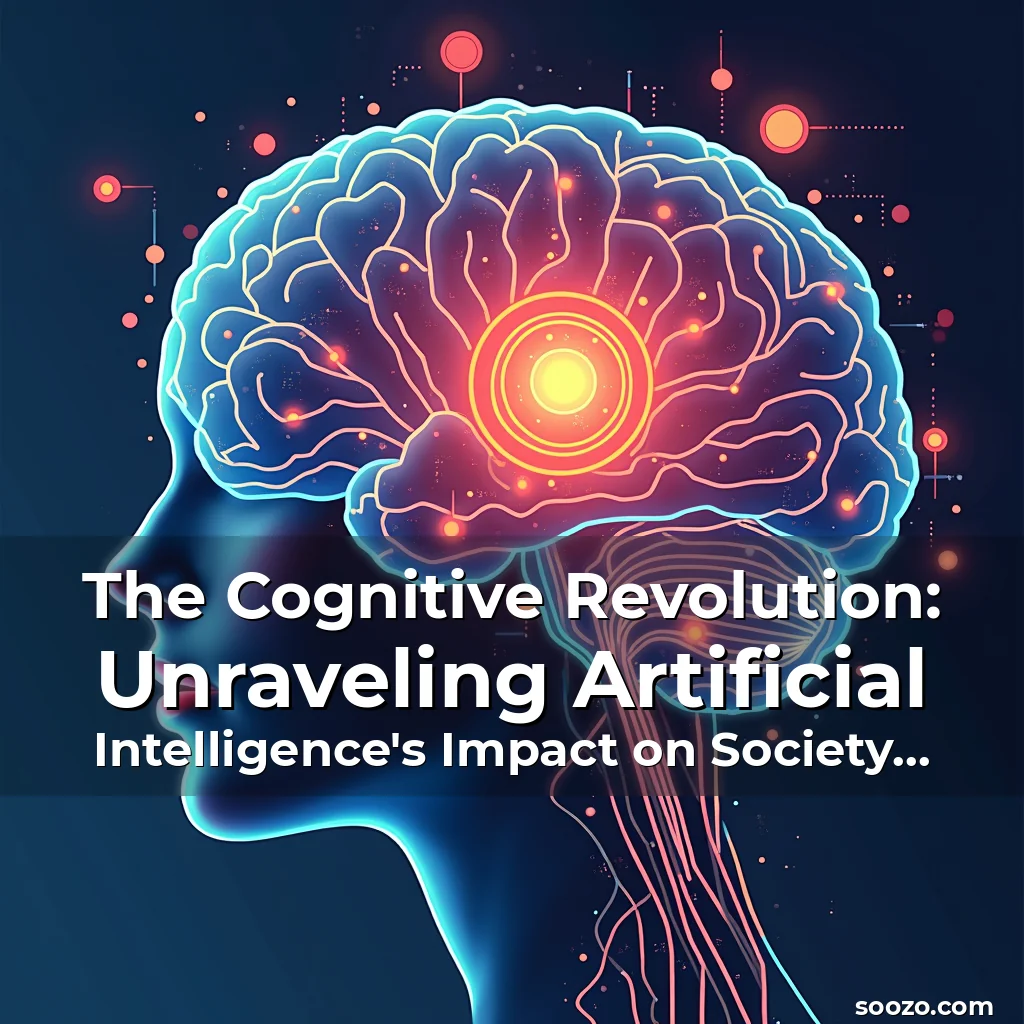
The Cognitive Revolution: Unraveling Artificial Intelligence’s Impact on Society and Technology
In an era defined by rapid technological progress, artificial intelligence has emerged as both a beacon of innovation and a subject of profound debate. From self-driving cars navigating urban landscapes to personalized recommendations shaping our digital experiences, AI is redefining what it means to be human in the modern age.
This exploration delves into the intricate layers of AI development, examining its historical roots, current applications across industries, ethical implications, future trajectories, and practical implementation strategies. By understanding these dimensions, we can better navigate the transformative power of intelligent machines.
The Genesis of Intelligent Machines: A Historical Perspective
The concept of creating machine intelligence dates back centuries, with early philosophical inquiries into automata and logic dating to ancient Greece. However, it was not until the mid-20th century that formal research began taking shape through academic institutions and government initiatives.
Alan Turing’s seminal 1950 paper “Computing Machinery and Intelligence” laid foundational groundwork by proposing the famous Turing Test as a criterion for determining machine intelligence. This theoretical framework sparked decades of research aimed at developing systems capable of mimicking human cognitive functions.
The Dartmouth Conference in 1956 marked a pivotal moment when researchers formally established artificial intelligence as a distinct field of study. This gathering brought together pioneers who would go on to develop early programming languages, expert systems, and rule-based decision-making models.
- Early breakthroughs: The creation of ELIZA in 1966 demonstrated basic natural language processing capabilities, while SHRDLU in 1970 showcased limited understanding of physical objects through symbolic manipulation.
- Funding shifts: Initial enthusiasm waned during the 1980s due to unmet expectations and reduced government funding, leading to what became known as the “AI winter.”
Modern Applications: Where AI Transforms Everyday Life
Contemporary AI implementations have permeated nearly every aspect of daily existence, from healthcare diagnostics to financial fraud detection. These advancements are driven by massive computational resources and sophisticated algorithms capable of analyzing vast datasets.
In the medical field alone, AI-powered diagnostic tools now analyze radiological images with accuracy rivaling that of experienced specialists. Machine learning models predict patient outcomes based on electronic health records, enabling proactive treatment approaches.
Beyond clinical settings, smart home devices utilize pattern recognition to anticipate user preferences. Voice assistants interpret complex commands while maintaining contextual awareness of ongoing conversations.
- Transportation revolution: Autonomous vehicle technology employs computer vision and sensor fusion to make real-time decisions, reducing accident rates through predictive analytics.
- Educational innovations: Adaptive learning platforms personalize curricula based on student performance metrics, identifying knowledge gaps and suggesting targeted interventions.
The Dual Nature of Progress: Ethical Considerations in AI Development
As AI becomes increasingly integrated into society, ethical dilemmas surrounding privacy, bias, and accountability demand careful scrutiny. Algorithmic transparency remains a critical concern, particularly in high-stakes domains such as criminal justice and hiring practices.
Data collection methods raise significant questions about consent and surveillance. Facial recognition technologies deployed in public spaces often lack clear regulatory frameworks governing their usage and storage protocols.
Algorithmic bias emerges when training data reflects existing societal prejudices, potentially reinforcing discriminatory patterns rather than mitigating them. This issue requires continuous monitoring and mitigation efforts throughout the development lifecycle.
- Accountability challenges: Determining responsibility for algorithmic errors presents legal complexities, especially in cases involving autonomous vehicles or medical diagnoses.
- Environmental impact: Training large-scale neural networks consumes substantial energy resources, prompting discussions about sustainable computing practices.
Navigating the Future: Emerging Trends in AI Research
Ongoing advancements continue pushing the boundaries of what AI can achieve, with quantum computing promising exponential improvements in problem-solving capacity. Researchers explore hybrid architectures combining symbolic reasoning with deep learning techniques.
Explainable AI (XAI) initiatives aim to create transparent models whose decision-making processes can be understood and audited by humans. This approach addresses concerns about black-box algorithms used in critical infrastructure sectors.
The integration of neuroscience principles into AI design leads to biologically inspired models that mimic human brain structures and connectivity patterns. Such developments may enhance both efficiency and adaptability in machine cognition.
- General purpose AI: While narrow AI dominates current applications, research into artificial general intelligence seeks to develop systems with broad cognitive abilities akin to human intellect.
- Multimodal learning: Combining visual, auditory, and textual information enables more comprehensive context understanding, crucial for tasks requiring environmental awareness.
Implementing AI Responsibly: Best Practices for Adoption
Successful AI deployment requires strategic planning that balances technical feasibility with ethical considerations. Organizations must establish governance frameworks ensuring compliance with evolving regulations and industry standards.
Data quality remains fundamental to effective model performance. Rigorous preprocessing steps help eliminate biases present in raw input sources before feeding them into training pipelines.
Continuous evaluation mechanisms track system behavior over time, allowing for timely updates when new information emerges or when previously undetected issues arise.
- Stakeholder engagement: Involving end-users in the design process fosters trust and ensures solutions address genuine needs rather than assumed requirements.
- Cross-disciplinary collaboration: Integrating expertise from ethics committees, social scientists, and domain specialists creates well-rounded implementations resistant to unintended consequences.
Education and Workforce Transformation: Preparing for an AI-Driven Economy
The rise of AI necessitates changes in educational paradigms, emphasizing skills that complement rather than compete with automation. Curriculums now incorporate elements of critical thinking, creativity, and emotional intelligence alongside traditional STEM subjects.
Lifelong learning programs enable professionals to acquire new competencies required in AI-enhanced work environments. Upskilling initiatives bridge knowledge gaps between emerging technologies and existing workforce capabilities.
Collaborative platforms facilitate knowledge sharing among experts working on different aspects of AI development, fostering cross-pollination of ideas that might otherwise remain siloed within individual organizations.
- Digital literacy: Basic understanding of how algorithms function empowers individuals to interact effectively with automated systems without being overwhelmed by complexity.
- Social-emotional skills: Human qualities such as empathy and interpersonal communication become even more valuable as routine tasks get delegated to intelligent agents.
Governance and Regulation: Shaping the Future of AI Policy
International cooperation plays a vital role in establishing norms around responsible AI development. Global agreements help prevent harmful misuse while promoting beneficial applications aligned with humanitarian goals.
National governments implement regulatory measures addressing specific risks associated with AI deployment. These policies often include requirements for algorithmic transparency, data protection, and fair treatment guarantees.
Industry-specific guidelines ensure consistency across sectors, preventing fragmentation that could hinder innovation or create unnecessary barriers to entry for smaller players.
- Standardization efforts: Developing common terminology and assessment criteria helps compare different AI systems objectively and measure their effectiveness reliably.
- Public-private partnerships: Collaborative ventures between academia, business entities, and governmental bodies accelerate progress towards safe and equitable AI adoption.
Conclusion
The journey toward fully realizing artificial intelligence’s potential involves navigating complex technical, ethical, and societal dimensions simultaneously. Understanding this multifaceted landscape equips us to harness its benefits responsibly while minimizing associated risks.
To engage meaningfully with AI’s evolution, individuals and organizations alike should prioritize education, advocate for balanced regulation, and actively participate in shaping the technologies that will define tomorrow’s world.

news is a contributor at Soozo. We are committed to providing well-researched, accurate, and valuable content to our readers.