
Unlocking the Power of Artificial Intelligence
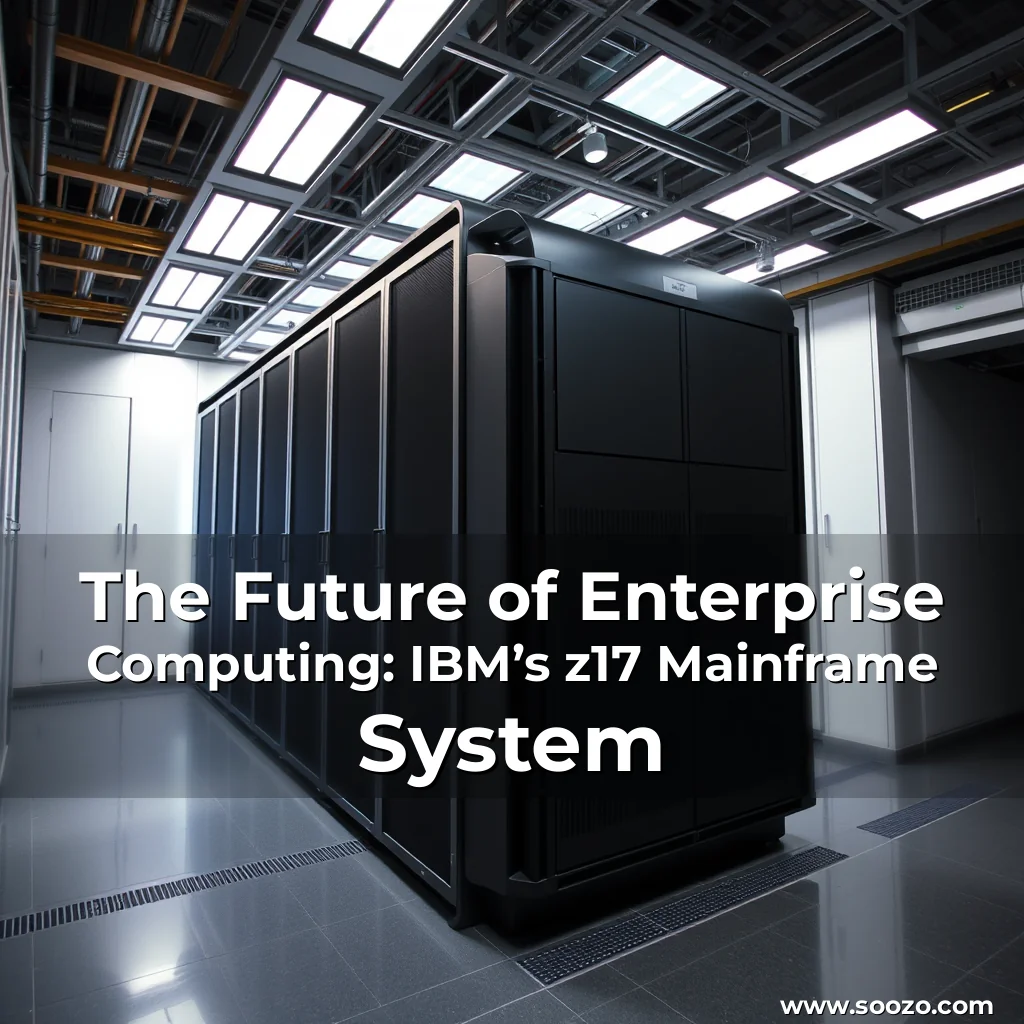
IBM’s latest generation enterprise mainframe system, the z17, is a game-changer in the world of enterprise computing. Powered by the new Telum II processor, this system offers significant performance gains over previous generations and seamlessly integrates artificial intelligence with traditional mainframe capabilities. At the heart of the z17 lies IBM’s Telum II processor, a second-generation chip that boasts eight 5.5 GHz cores and 360MB of on-chip cache, along with an embedded AI accelerator. This cutting-edge processor enables the system to perform over 450 billion AI inferencing operations per day, achieving latency as low as one millisecond.
Breaking Down Barriers to AI Adoption
The z17’s ability to run generative AI workloads directly on the mainframe sets it apart from its predecessors. The Spyre Accelerator, expected to be available in Q4 2025, will make this possible by enabling native support for large language models and other advanced AI applications. This eliminates the need to rely on external GPUs or cloud services, ensuring that sensitive data remains on-premises and under the control of the organization.
- Generative AI workloads can be run directly on the mainframe, reducing the need for external infrastructure.
- The Spyre Accelerator eliminates the reliance on external GPUs or cloud services, ensuring sensitive data remains on-premises.
Enterprise AI: A Key Differentiator
The z17 is deeply integrated with IBM’s watsonx platform, including tools like watsonx Code Assistant for Z and watsonx Assistant for Z. These AI-driven tools support the modernization of legacy COBOL applications by simplifying code maintenance, accelerating refactoring efforts, and lowering the learning curve for new developers.
- Modernization of legacy COBOL applications through AI-driven tools.
- Support for hybrid cloud integration, NoSQL databases, and hardware-accelerated AI processing.
- IBM’s watsonx platform provides a comprehensive AI solution for enterprise applications.
Security and Reliability
The z17 maintains the fundamental qualities that have defined the mainframe for decades. It offers built-in high availability through fault-tolerant design and advanced error detection, ensuring uninterrupted operations. Security remains a cornerstone of the platform, with end-to-end encryption and support for confidential computing that protects data while it is being used, not just during storage or transit.
Software Enhancements
To complement the z17, IBM introduced z/OS 3.2, its AI-optimized operating system that supports hybrid cloud integration, NoSQL databases, and hardware-accelerated AI processing. Operational management is enhanced through IBM Z Operations Unite, which uses OpenTelemetry to unify and streamline observability and incident response.
- Hybrid cloud integration support through z/OS 3.2.
- NoSQL databases and hardware-accelerated AI processing.
- Operational management through IBM Z Operations Unite.
IBM’s Commitment to Security and Support
IBM backs the launch with expanded lifecycle support services and new AI-powered customer service tools like IBM Agent Assist, helping clients manage critical workloads with maximum uptime and resilience.
IBM’s commitment to security and support is unwavering. With expanded lifecycle support services and AI-powered customer service tools, clients can trust that their mainframe systems will be protected and supported throughout their lifecycle.
Is the Mainframe Still Relevant?
Mainframes continue to serve as the backbone of industries where uptime, throughput, and security are non-negotiable. Sectors like financial services, healthcare, insurance, and public infrastructure still rely heavily on mainframe systems for their most critical workloads. The z17 arrives when enterprises are under growing pressure to derive more value from existing data assets while improving security posture and managing talent shortages. IBM’s positioning of the z17 as an AI-native mainframe—not a relic of the past but a platform for future innovation—aligns with these emerging business needs.
A New Era of Mainframe Computing
By enabling AI directly on the platform, IBM reduces the need to offload sensitive data to external environments for analysis. This reduces security risks and latency, while also sidestepping the increasing difficulty of sourcing GPU capacity for enterprise AI workloads. The z17 is a testament to IBM’s commitment to innovation and its ability to adapt to changing business needs. As the company continues to evolve and improve its mainframe offerings, it is clear that the future of enterprise computing is bright.
Analyst’s Take
While companies like Nvidia dominate the GPU market and cloud providers such as AWS, Microsoft Azure, and Google Cloud lead the AI services space, IBM is carving out a different path. With the z17, IBM offers an on-premises, vertically integrated solution tailored for industries that demand regulatory compliance, data control, and uninterrupted operations. Despite lingering perceptions of the mainframe as outdated or complex, IBM is actively working to change that narrative. New AI-powered tools, along with low-code development environments and modern IDEs, are helping reduce complexity and make the platform more accessible to a new generation of developers. The z17 is also central to IBM’s hybrid cloud vision. Though not cloud-native in the strictest sense, it integrates with Red Hat OpenShift and supports modern DevOps pipelines. Combined with advanced observability tools and AI-assisted development environments, the z17 complements, rather than competes with, cloud-native infrastructure. For organizations that require scalable, secure, and resilient infrastructure, the mainframe remains relevant and essential.
Conclusion
The z17 mainframe system represents a significant milestone in the evolution of enterprise computing. With its ability to integrate artificial intelligence with traditional mainframe capabilities, the z17 offers a unique solution for industries that demand regulatory compliance, data control, and uninterrupted operations. As IBM continues to innovate and improve its mainframe offerings, it is clear that the future of enterprise computing is bright.

news is a contributor at Soozo. We are committed to providing well-researched, accurate, and valuable content to our readers.