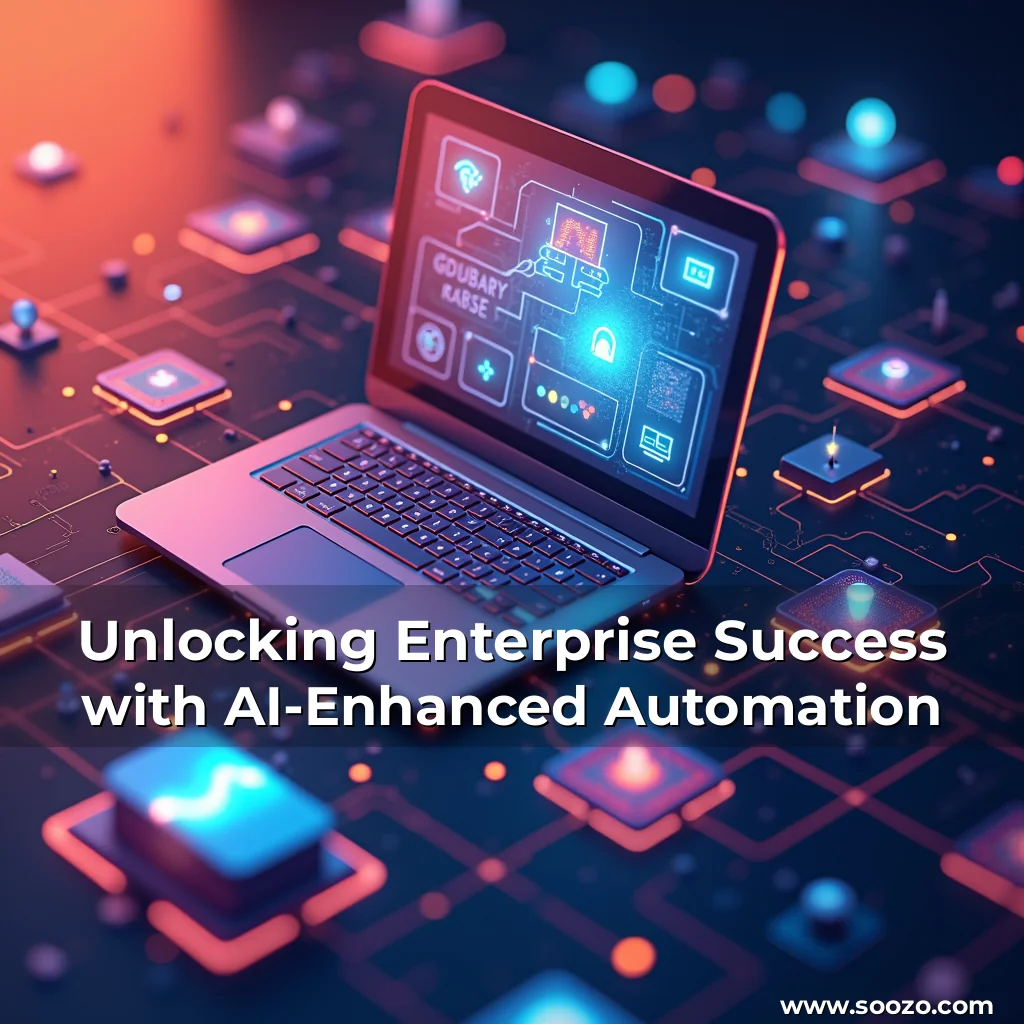
European organisations are under immense pressure to innovate and transform their technology investments in response to economic pressures and geopolitical challenges. However, achieving all this while managing cost, cybersecurity, and regulatory demands requires a delicate balance. IT automation is emerging as a critical enabler in this journey towards success.
Businesses must transition from siloed IT automation efforts towards a comprehensive, purposeful automation strategy that spans the entire enterprise. This transformation must foster collaboration across diverse tools, vendors, and cloud environments, empowering teams to be innovative and respond end-to-end to events across the business.
- By taking this unified approach, teams can share best practice and learnings, even rolling out standard blueprints, eliminating duplication and streamlining efficiency.
- Additionally, teams can access powerful scripts written by automation specialists, simplifying complex tasks and acting as force multipliers that allow teams to focus on strategic initiatives.
Incorporating AI into unified systems can bring powerful benefits to the enterprise. Businesses can move from static, rule-based processes to dynamic, intelligent workflows by integrating AI into automated systems. AI-infused automation can predict system failures, distribute resources nearly in real-time and even create system-specific code.
- AI-infused automation can support events for which playbooks have yet to be written, reducing manual workloads and accelerating time-to-market for new solutions.
- Furthermore, AI tools simplify complex tasks, empowering junior developers through natural language-driven code generation and acting as force multipliers that allow teams to focus on strategic initiatives.
As AI models improve and deployment options diversify, AI support for coding and automation scripting will expand, enhancing productivity and fostering the development of new skills within teams.
Regulatory compliance and operational resilience are also critical considerations. The EU’s DORA (Digital Operational Resilience Act) is reshaping how organisations manage IT environments, emphasising digital resilience in the face of global instability.
| Key Features | Benefits |
|---|---|
| Digital Operational Resilience Act (DORA) | Fortifies IT security of European financial institutions, ensuring they can withstand significant operational interruptions. |
| Predictive AI in production | Supports proactive decision-making, enhancing business outcomes and reducing risk. |
| Generative AI | Enables the creation of novel solutions, driving innovation and growth. |
CTOs must guard against the risk of increasing technical debt from excessive tooling and instead leverage their existing investments. By doing so, they can reduce silos between teams, ensure greater consistency, and promote a more unified, resilient operational approach.
An automation-first mindset effectively addresses these challenges, empowering teams to innovate rapidly while adhering to regulatory requirements.

news is a contributor at Soozo. We are committed to providing well-researched, accurate, and valuable content to our readers.