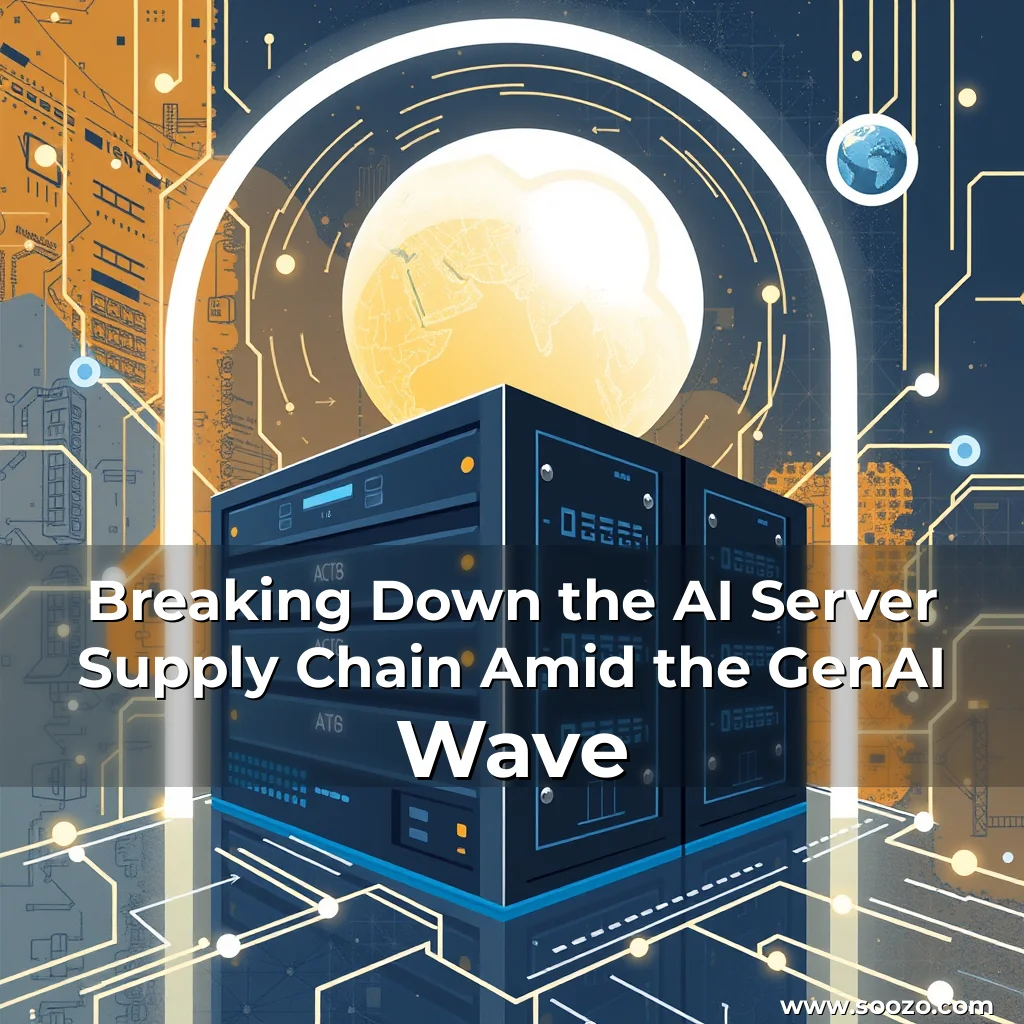
The global server market is undergoing a significant transformation, driven by three key forces: cloud service providers, GPU computing vendors, and major server brands. As the demand for AI servers continues to grow, companies are scrambling to adapt and stay ahead of the curve.
Key Drivers of the AI Server Market
• **Cloud Hyperscalers and GPU Suppliers:** These companies are driving strong demand for AI servers to support their AI-as-a-service offerings. Cloud giants like AWS, Google, Meta, Microsoft, and Tencent are expanding their AI computing capabilities and data center footprints. • **GPU Computing Vendors:** Companies like Nvidia, AMD, and Intel are developing specialized GPUs that can handle the demands of AI workloads. • **Server Brands:** Major server brands like Dell, HPE, Lenovo, and Supermicro are also investing heavily in AI server technology, with a focus on liquid cooling solutions and innovations.
Impact of AI on Data Center Infrastructure
The rise of AI is reshaping the data center hardware, infrastructure, and operational models. As AI demands increase, companies are shifting towards:
• **Liquid Cooling Solutions:** Companies like IBM, Intel, Jetcool, Impact, Chilldyne, and HP are developing innovative liquid cooling solutions that can efficiently cool high-density AI systems. • **High-Performance Servers:** The demand for high-performance servers is growing, with companies like Dell and HPE developing specialized servers that can handle the demands of AI workloads.
Strategic Development of Taiwan’s AI Server Supply Chain
Taiwan’s AI server supply chain is a critical component of the global AI ecosystem. Companies like Quanta Computer, Wistron, Wiwynn, Inventec, and Inspur are leading the charge in developing AI server technology, with a focus on:
• **MLCC (Multilayer Ceramic Capacitors):** Companies like Chenming and Lite-On are developing specialized MLCCs that can handle the high-frequency demands of AI workloads. • **Motherboards and Chassis:** Companies like Dell and Lenovo are developing specialized motherboards and chassis that can efficiently support AI server workloads.
GenAI Adoption Trends
The rise of Generative AI is driving up demand for both training and inference servers across global data centers. As companies shift towards GenAI, they are investing in:
• **Training Servers:** Companies like Meta and Microsoft are developing specialized training servers that can handle the demands of large-scale GenAI workloads. • **Inference Servers:** The demand for inference servers is growing, with companies like Google and Amazon developing specialized servers that can efficiently handle GenAI workloads.
Cost Structure Comparison: General-Purpose Servers vs. AI Servers
The cost structure of general-purpose servers and AI servers is significantly different, with AI servers requiring:
• **High-Performance Components:** Companies like Intel and Nvidia are developing specialized components that can handle the demands of AI workloads. • **Advanced Cooling Systems:** Companies like IBM and HP are developing advanced cooling systems that can efficiently cool high-density AI systems.
• **Accelsius:** A leading provider of AI server solutions, with a focus on liquid cooling solutions and innovations. • **AIC:** A company that develops specialized AI server solutions for cloud giants like Amazon and Google. • **Allied:** A company that develops AI server solutions for data centers and cloud providers.
The AI server market is undergoing a significant transformation, driven by the growth of GenAI and the increasing demand for AI workloads. As companies scramble to adapt and stay ahead of the curve, it’s clear that the AI server supply chain is a critical component of the global AI ecosystem. By understanding the key drivers of the AI server market, we can better navigate the opportunities and challenges that lie ahead.

news is a contributor at Soozo. We are committed to providing well-researched, accurate, and valuable content to our readers.