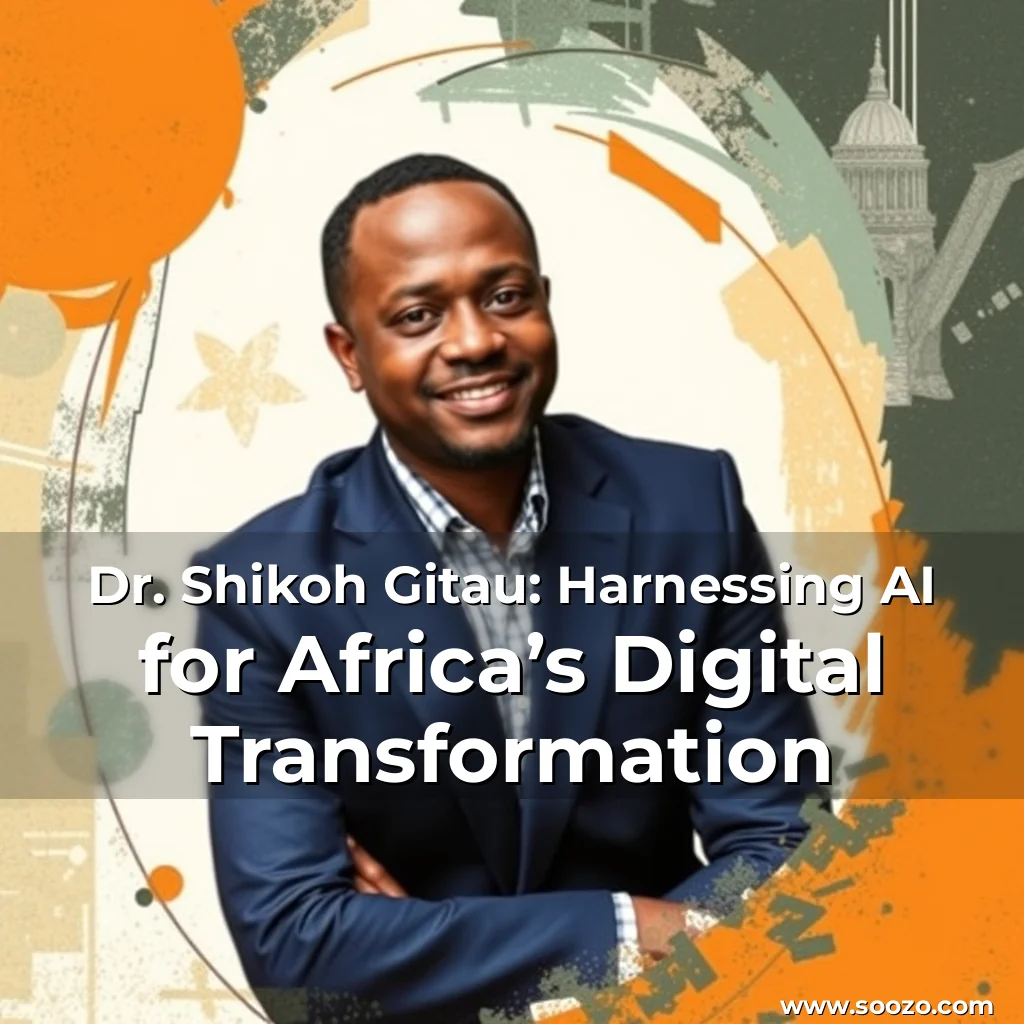
AI has the potential to revolutionize various sectors in Africa, including healthcare, finance, and education. However, the regulation of AI is a pressing concern. Dr. Shikoh Gitau, the CEO of Kahala, a company that focuses on digital transformation in Africa, shared her perspective on the African approach to AI regulation during a thought-provoking discussion with host Sanjay Puri on the “Regulating AI” podcast.
- Dr. Gitau emphasized that AI regulation is crucial to protect human dignity and lives, as the technology is rapidly evolving and its impact is yet to be fully understood.
- She highlighted the importance of finding a balance between fostering technological advancement and maintaining ethical safeguards in AI development.
- The conversation focused on Africa’s potential for AI, its practical applications, and the need for gradual regulation to ensure innovation is not stifled.
Dr. Gitau’s background and experience in the tech industry have equipped her with a unique perspective on AI and its potential in Africa. With a career spanning various technological innovations and digital solutions for Africa, she has witnessed firsthand the challenges and opportunities that come with embracing new technologies. “Every time I travel, I hear people talk about AI as if it’s a nice-to-have, that it will increase productivity and efficiency,” Dr. Gitau said. “For us, it’s a matter of life and death.” She stressed that the responsibility to regulate and innovate must be handled with extreme care.
| Key Takeaways | • AI regulation is crucial to protect human dignity and lives. |
| • Balance between technological advancement and ethical safeguards is necessary. | • Gradual regulation is necessary to ensure innovation is not stifled. |
The conversation shifted to AI’s potential in addressing Africa’s healthcare challenges. Gitau highlighted that AI can provide better healthcare services, such as first-line diagnoses through mobile platforms. “With AI, there is the potential to provide better healthcare services, such as first-line diagnoses through mobile platforms,” Dr. Gitau explained. “If I can take a photo of my disease (…) and send it to a bot that uses AI to provide me with a potential diagnosis, even at 80% accuracy, it’s better than no diagnosis at all.”
Dr. Gitau is also deeply involved in discussions around AI policy in Africa. She believes that regulation should not stifle innovation but should be implemented gradually as the technology unfolds. “What we need to do is put measures in place to protect human dignity and human lives, but on the other hand, allow for innovation to go and be built,” Dr. “It’s Africa’s moment to take that leap,” Dr. Gitau concluded, seeing AI as a tool to elevate human flourishing in Africa, providing opportunities for development that have long been out of reach. In her vision for AI, Dr. Gitau envisions a practical, enabling technology that empowers Africans to improve their lives. “When AI becomes practical, when it’s not just a hype word, that’s when we will truly see the impact of this technology on our continent,” she said. “Africa showed the world how to use the mobile phone; (…) and we are going to show the world how AI can actually improve people’s lives. Don’t be left behind in this journey,” Dr. Gitau left listeners with a powerful message. Highlights
- Africa’s high mobile phone penetration creates opportunities for AI applications.
- AI can address healthcare challenges in Africa through practical solutions.
- Gradual regulation is necessary to ensure innovation is not stifled.
Definitions
Quoted Sections
“Every time I travel, I hear people talk about AI as if it’s a nice-to-have, that it will increase productivity and efficiency,” Dr. “For us, it’s a matter of life and death.”
“With AI, there is the potential to provide better healthcare services, such as first-line diagnoses through mobile platforms,” Dr.
“What we need to do is put measures in place to protect human dignity and human lives, but on the other hand, allow for innovation to go and be built,” Dr.
“It’s Africa’s moment to take that leap,” Dr.
AI has the potential to revolutionize various sectors in Africa, including healthcare, finance, and education. Gitau emphasized that AI regulation is crucial to protect human dignity and lives, as the technology is rapidly evolving and its impact is yet to be fully understood. The conversation focused on Africa’s potential for AI, its practical applications, and the need for gradual regulation to ensure innovation is not stifled. She also emphasized the importance of finding a balance between fostering technological advancement and maintaining ethical safeguards in AI development. She concluded that AI is a tool to elevate human flourishing in Africa, providing opportunities for development that have long been out of reach. Gitau’s message was clear: Africa has the potential to show the world how AI can improve people’s lives, and it’s time to take that leap. Gitau’s emphasis on the importance of finding a balance between technological advancement and ethical safeguards in AI development resonates with the need to ensure that AI is used in ways that benefit society as a whole. Her perspective on the African approach to AI regulation highlights the need for gradual regulation to ensure innovation is not stifled. By implementing measures to protect human dignity and human lives, while allowing for innovation to flourish, we can unlock the full potential of AI in Africa.

news is a contributor at Soozo. We are committed to providing well-researched, accurate, and valuable content to our readers.