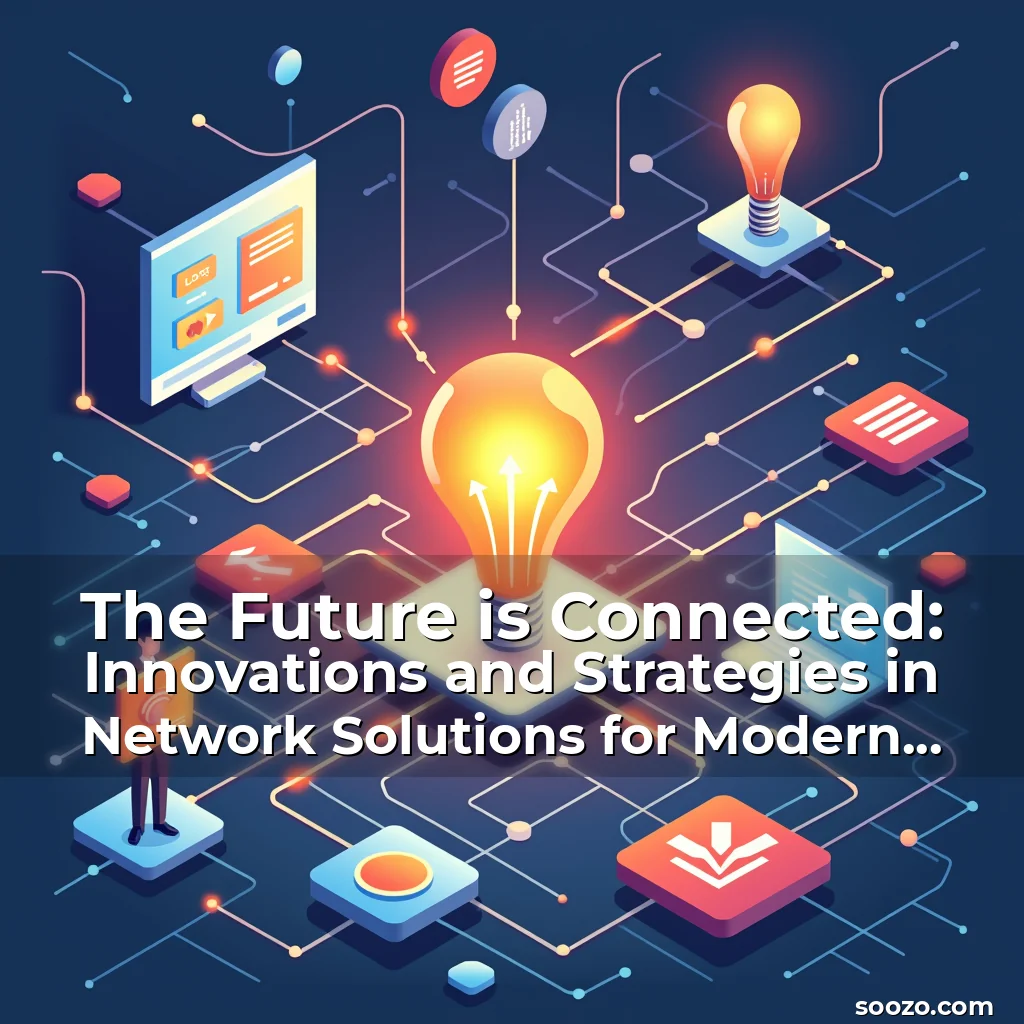
The Future is Connected: Innovations and Strategies in Network Solutions for Modern Communities
In today’s hyper-connected world, the demand for robust and scalable network solutions has never been greater. From smart cities to remote work environments, communities are increasingly relying on advanced networking technologies to meet their evolving needs. This article explores cutting-edge innovations and strategic approaches that define modern network solutions.
As digital transformation accelerates across industries, understanding how to implement effective network strategies becomes crucial. Whether you’re part of the Soozo community or simply seeking knowledge about network solutions, this guide will provide invaluable insights tailored for your requirements.
Understanding the Core Principles of Network Solutions
A solid foundation in network principles is essential before diving into complex implementations. At its core, any successful network solution relies on three fundamental components: connectivity, reliability, and security. These elements form the backbone of both personal and enterprise-level networks.
Connectivity ensures devices can communicate seamlessly over various mediums such as fiber optics, Wi-Fi, or cellular data. Reliability guarantees consistent performance without unexpected downtime, while security protects against cyber threats and unauthorized access.
- Scalability: Networks must grow alongside user demands without compromising quality or efficiency.
- Interoperability: Different systems need to function together smoothly through standardized protocols and interfaces.
Evolving Technologies Shaping Next-Generation Networks
Technological advancements continue to redefine what we consider possible within network infrastructure. Emerging trends like Software Defined Networking (SDN) and Network Function Virtualization (NFV) are revolutionizing traditional architectures by offering unprecedented flexibility and control.
SDN separates the control plane from the data forwarding planes, allowing centralized management of network resources. NFV enables virtualized network functions previously handled by dedicated hardware, reducing costs and increasing agility in deployment scenarios.
The Rise of Edge Computing
Edge computing brings processing power closer to where data originates, significantly reducing latency issues common in cloud-based models. According to Gartner, edge computing spending is projected to reach $68 billion by 2025, highlighting its growing importance in IoT ecosystems.
This shift towards decentralized computation not only enhances real-time decision-making capabilities but also minimizes bandwidth usage through localized data handling. Industries ranging from healthcare to autonomous vehicles benefit immensely from these improvements.
Designing Resilient Network Architectures for Community Needs
Creating resilient networks requires careful consideration of local infrastructure characteristics and potential vulnerabilities. For instance, rural areas might prioritize satellite uplinks due to limited terrestrial options, whereas urban centers may invest heavily in fiber-optic backbones.
Redundancy plays a critical role here too—implementing dual-path routing schemes helps maintain service continuity during outages. Additionally, adopting hybrid models combining wired and wireless connections offers increased adaptability under varying conditions.
Securing Your Network Against Evolving Threats
Cybersecurity remains one of the most pressing concerns when implementing new network solutions. As attackers develop sophisticated methods targeting both individuals and organizations alike, proactive defense mechanisms become non-negotiable aspects of any sound strategy.
Implementing multi-factor authentication adds layers of protection beyond simple passwords alone. Regular software updates ensure known exploits remain patched promptly, minimizing exposure windows for malicious actors.
Zero Trust Architecture: A Paradigm Shift in Security Models
Traditional perimeter-based defenses have proven insufficient against modern attack vectors. The Zero Trust model assumes breach inevitability rather than focusing solely on external threats. It mandates strict verification at every stage regardless of origin location or device type involved.
By enforcing continuous monitoring and least privilege access policies, Zero Trust reduces risk surfaces considerably compared to conventional approaches. Implementation involves deploying identity-aware firewalls along with behavioral analytics tools capable of detecting anomalous activity patterns automatically.
Leveraging AI and Machine Learning for Intelligent Networking
Artificial Intelligence (AI) and machine learning algorithms are transforming how networks operate autonomously. Predictive maintenance features now anticipate equipment failures based on historical performance metrics collected over time.
Machine learning models analyze vast amounts of traffic data identifying unusual behavior indicative of potential breaches early enough to mitigate damage effectively. Such capabilities enable self-healing networks able to adjust configurations dynamically according to changing environmental factors.
Case Studies Demonstrating Real-World Applications
Examining actual deployments provides concrete evidence supporting theoretical discussions around optimal practices in network design. One notable example includes Smart City initiatives utilizing mesh networks for enhanced coverage uniformity across densely populated regions.
These projects often integrate public safety applications such as emergency response coordination systems which rely critically upon stable internet connectivity maintained round-the-clock via redundant pathways established strategically throughout city layouts.
Fostering Collaboration Through Open Source Contributions
Open source platforms contribute substantially toward democratizing access to high-quality networking tools available globally irrespective of financial constraints faced by certain groups or entities.
Communities engaged actively in contributing code enhancements regularly see faster innovation cycles driven collectively rather than exclusively proprietary development efforts confined within corporate walls.
Towards Sustainable Network Practices
Sustainability considerations cannot be overlooked when evaluating long-term viability of chosen technological paths forward especially given current climate change challenges facing our planet today.
Energy-efficient routers consuming less electricity represent just one facet; broader ecosystem impacts including e-waste reduction programs also deserve attention as responsible stakeholders aim align operations accordingly with global green objectives pursued internationally.
Conclusion
This exploration highlights key dimensions influencing contemporary discourse surrounding network solutions applicable broadly whether within specialized contexts like those encountered frequently among members belonging specifically to Soozo groupings or generally elsewhere.
Adopting innovative yet secure methodologies backed by collaborative spirit promises substantial benefits leading ultimately towards realization envisioned future characterized fully interconnected societies thriving harmoniously amidst ever-evolving technological landscapes ahead.

news is a contributor at Soozo. We are committed to providing well-researched, accurate, and valuable content to our readers.